Chapter 02 · The Science
A whole world
inside a life.
What researchers observed. What they measured. What we can—and cannot—conclude.
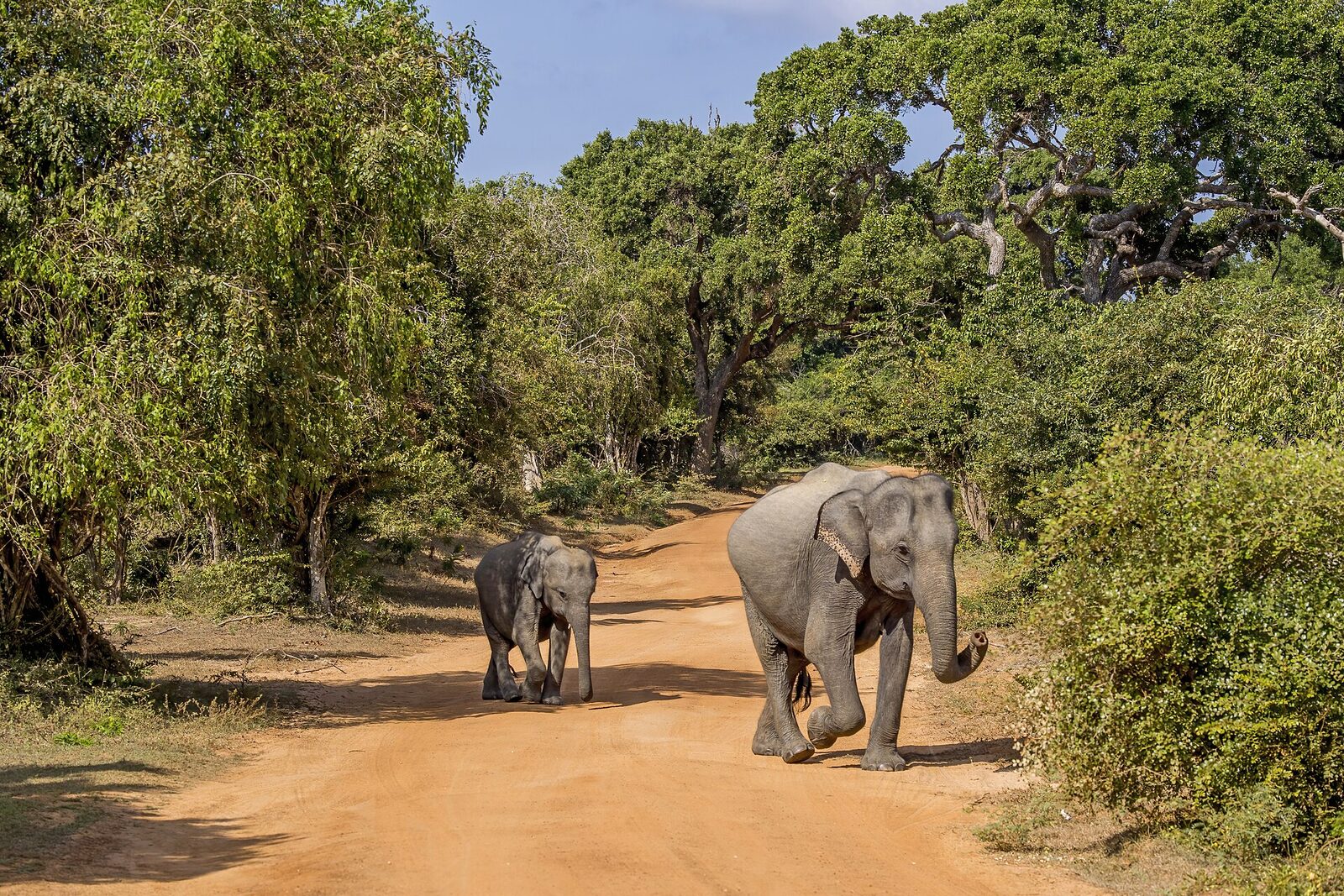
You do not need to imagine an elephant thinking exactly like a person to recognize that a life can be diminished. The studies below examine relationships, behavior, physical health and survival. They were conducted in different countries and conditions; those differences stay visible.
A companion is not interchangeable.
At Udawalawe, researchers identified 286 adult female Asian elephants and observed their associations over 20 months. Group membership changed, but individuals maintained pools of longer-term companions. A small group seen on one afternoon could therefore be part of a much larger social world.17
Separation is not simply moving an animal from one location to another. It can remove access to particular companions. That is why our welfare questions should include who an elephant can choose to spend time with—not just how much space appears on a site plan.
A calf belongs to a long span of time.
Researchers estimated an average age of 13.4 years at first reproduction and a median gap of about six years between births in the population studied. A breeding female’s life unfolds on a timescale very different from a tourist season.36
These numbers describe one wild population, not a fixed schedule for every elephant. They help explain why removing young animals cannot be treated like taking replaceable units out of a stockroom.
A grandmother’s presence can matter.
In a timber-elephant population, researchers associated nearby grandmothers with improved calf survival among younger mothers and benefits to daughters’ reproduction. The study shows a measurable connection between generations, beyond the immediate mother–calf pair.37
This was not an experiment that randomly separated families. It is evidence that a young elephant’s social surroundings can include valuable relationships with older animals. Thinking only in pairs can miss part of what separation removes.
An animal that can wait for someone else.
The rope only works if two elephants pull.
In a study involving twelve elephants, a food platform required coordinated pulling at two rope ends. Elephants learned to wait for a delayed partner, including delays of up to 45 seconds. Further trials tested whether they recognized the partner also needed access to the rope.19
The important observation is the pause. Pulling harder could not solve the problem; the other elephant’s participation mattered. This demonstrates coordination in a particular task, not human-like reasoning in every situation.
Happy touched the mark on her own head.
Researchers presented three adult females with a large mirror. Happy passed the mark test: using the reflection to investigate a visible mark on her own body. The result supports a capacity for mirror self-recognition in Asian elephants. The other two did not pass that test.18
One positive result is meaningful. It is not a licence to claim that every elephant passes, or that a mirror experiment measures everything an animal understands about itself.
What follows another elephant’s distress?
Observers compared behavior after distress events with control periods. Elephants increased directed touching and vocal contact with distressed individuals. The researchers interpreted the pattern as reassurance and a basis for investigating consolation.20
The study does not let us translate an elephant’s feelings into a human sentence. It does show that distress can change how other elephants approach and respond.
A call for a particular individual.
Researchers found evidence that calls carry information about their intended recipient. In playback experiments, elephants responded differently to calls addressed to them. The finding is described as name-like communication.21
After a calf dies, the relationship may not immediately stop.
A 2022 analysis assembled 25 recorded cases of Asian elephants responding to dead elephants. Five involved adult females carrying dead calves. The material also documented investigation of bodies and other responses that extend beyond simple avoidance.22
These were opportunistically filmed events, not a representative sample. The footage cannot tell us how often the behavior occurs, or establish a human-like understanding of death. But carrying a calf’s body is an observation, not a feeling invented by the viewer.22
The evidence does not give us access to her thoughts.
It gives us reason to take her attachments seriously.
The costs can outlast the moment of capture.
Stress was measured, not inferred from a photograph.
Researchers monitored 41 calves undergoing taming and 16 control individuals, using five physiological measures. Stress-related measures rose during the early days of the procedure; some settled within days, while another took one to two months. This was primarily evidence of acute stress, not proof of lifelong damage in every calf.38
The study also interviewed mahouts, who raised concerns about their own safety when methods change. A workable response must protect calves and give handlers safer ways to care for them.38
A mortality cost lasting roughly a decade.
An analysis of 5,150 timber elephants compared wild-caught with captive-born animals. Mortality was higher following wild capture, particularly soon afterward; the adverse effect declined over time but remained noticeable for roughly a decade. Capture at older ages was more costly.23
This was an observational study in a semi-captive working population. It measured deaths, not an uninterrupted ten-year record of stress hormones, and it cannot be converted into a precise lifespan prediction for a temple elephant.23
The risk rose at the age training began.
Using records spanning 43 years, researchers found a more than 50% rise in mortality risk at age four, the age associated with taming. This is a relative increase in risk—not a claim that half the calves died. Weaning, maternal separation, relocation and training overlapped, so the analysis cannot isolate one cause.24
Survival also improved substantially over the study period. That matters: the finding identifies a dangerous transition and the possibility of reducing harm, rather than treating every death as inevitable.24
Repeated swaying is a welfare question.
A study of 89 elephants at 39 zoos examined repetitive behaviors such as rocking and swaying. Social conditions were important predictors. These movements are called stereotypies; their context and history matter when assessing welfare.25
A brief clip cannot diagnose PTSD or establish the cause of a movement. Nor does a lack of visible swaying prove good welfare. Evaluation needs behavior over time, medical information and knowledge of the animal’s living conditions.25
The surface underfoot is part of the story.
A clinical study associated greater exposure to hard surfaces with foot and musculoskeletal problems. It gives a specific reason to examine flooring and time spent standing, rather than relying on an animal’s outward size and strength as reassurance.26
The study population was in North American zoos. It does not prove that a particular Sri Lankan procession caused a particular injury. It helps identify a risk that careful welfare assessment should investigate.26
A credible argument must survive inconvenient evidence.
A July 2026 study of zoo records from 1960–2024 found substantial improvements in elephant longevity, with survival comparable to or higher than the wild populations evaluated. That challenges a blanket claim that elephants necessarily live shorter lives in captivity.27
Length of life still does not measure freedom of movement, choice of companions or freedom from pain. Our position against performance must stand on those welfare questions—not on an outdated universal claim about lifespan.
Continue · Chapter 03What changes when you look again? Examine the familiar explanations without asking the elephant to disappear behind them.