The Elephant Ledger

A voice for Sri Lanka’s elephants.

The Elephant Ledger · Sri Lanka

Behind
the perahera.

The lights reveal the procession.
They do not reveal the elephant’s life.

This site documents the abuse and welfare failures behind Sri Lanka’s ceremonial elephant tradition: animals performing while unwell, beatings justified as obedience, and lives constrained by captivity.

The perahera deserves a future without elephant suffering.

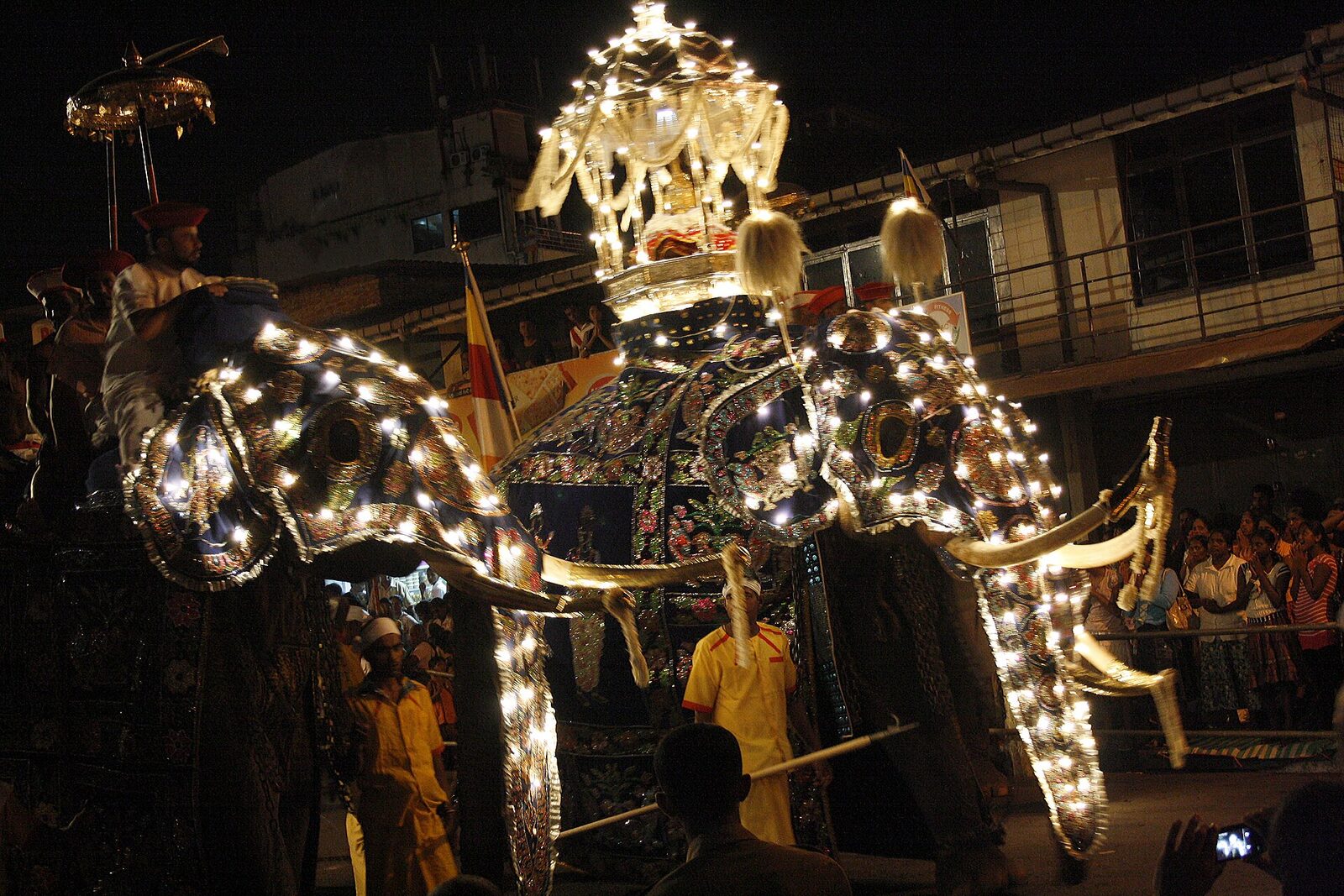
Costumed elephants in the illuminated Kandy Esala Perahera procession.
Kandy Esala Perahera. Contextual photograph; these are not the named case animals below.Daniel Liabeuf · CC BY-SA 3.0 · Cropped

The record behind the ceremony

An elephant can be revered.
And still be failed.

The perahera carries devotion, memory and craftsmanship. None of those tells us whether an elephant is healthy, how it was trained, or what happens when the crowd leaves. The records below concern Kandy’s procession and the wider temple-elephant system; they are not all incidents at the same festival.

2019

Kandy Esala Perahera
Reported death

Tikiri: the body beneath the costume.

Photographs released by Save Elephant Foundation showed an elderly elephant whose severely thin body had been hidden beneath ceremonial dress. Public concern followed. Tikiri was withdrawn from the closing parade; weeks later, her death was announced. The organization put her age at 70.2

The temple’s reported explanation was a digestive ailment that prevented weight gain. The owner was also reported to hope participation might help her recover.3 Those explanations leave the central decision exposed: a visibly frail animal had been asked to participate.

The reporting establishes concern, withdrawal and a reported death. It does not establish the medical cause of death.
2022–23

Temple elephant
Official medical transfer

Muthu Raja: an elephant who needed to leave.

Thai experts recommended that Muthu Raja, also called Sak Surin, stop participating in parades and return to Thailand for treatment. Thailand’s Foreign Ministry recorded his move to Dehiwala Zoo in November 2022 for initial care.5

On 2 July 2023 he was flown to Chiang Mai and taken onward to Lampang for quarantine and treatment. The Thai Embassy documented the operation involving veterinarians, mahouts and both governments.4

The official records confirm intervention and transfer. They do not establish every allegation about earlier mistreatment or his present health.

Care should not depend on an elephant becoming an international diplomatic concern.

Bellanwila · January 2020 reporting

When a beating is
called obedience.

The Daily Mirror reported footage of Myan Prince, also known as Myan Kumara, being beaten while restrained at Bellanwila Temple. A temple spokesperson acknowledged the beating and said it was intended to make him obey commands.7

“It’s just a tiny beating”

A temple spokesperson, as reported by the Daily Mirror.7

The temple had also rejected coverage it considered exaggerated.8 This was a temple incident, not footage established here as being filmed during Kandy’s perahera.

What makes a large wild animal comply?

In the same report, former Wildlife Department director-general Dr Sumith Pilapitiya described dominance-based training and urged a move to positive reinforcement.7

There is also physiological evidence. A 2024 Myanmar study monitored 41 calves undergoing taming and 16 controls. Stress-related measures rose early in the procedure. Some recovered within days; another took one to two months.38

The study measured acute stress in Myanmar. It does not prove that every Sri Lankan elephant received identical training or suffered lifelong trauma.

A successful command tells the audience that an animal obeyed. It does not tell them how obedience was obtained.

The hours outside the spectacle

The chains do not become
harmless between parades.

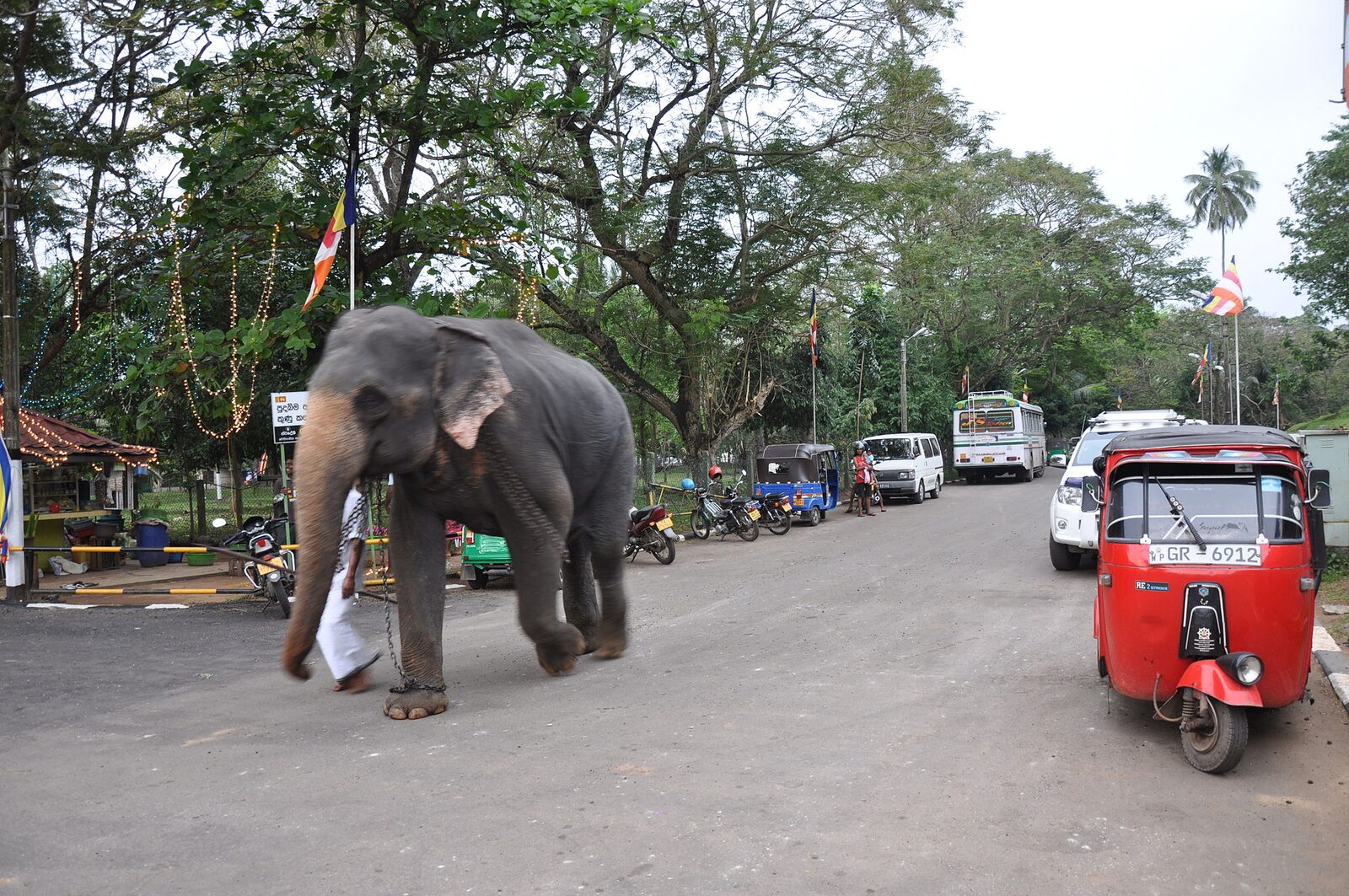
An elephant walking with chains around its legs at Kelaniya, Sri Lanka.
Kelaniya. A contextual photograph of restraint, not an image from the investigation described here.Jorge Láscar · CC BY 2.0

What an investigator documented

During an annual procession in Sri Lanka, a Lady Freethinker investigator documented prolonged chaining on concrete amid loud music, lights, traffic and crowds. The organization reported visible wounds and callouses, and raised concerns about costumes covering the ears and interfering with heat regulation.16

This is a campaigning organization’s firsthand account of observed conditions, not a national prevalence survey. It does not establish heat injury in every dressed elephant.

Why the surface and duration matter

Research in North American zoos associated greater exposure to hard surfaces with foot and musculoskeletal problems.26 It cannot diagnose the elephant in a photograph. It identifies a reason to examine the hours spent standing, the ground underfoot, movement and veterinary care.

Before an elephant reaches the procession

A registration document
is not the whole history.

A Sri Lankan study identified 55 illegal elephant-trade cases during 2008–2018; more than half involved animals aged five or younger. Its review described falsified registration and institutional involvement.1

These are documented routes into captivity, not proof that every perahera elephant was illegally acquired. They make origin, ownership and independent scrutiny essential welfare questions.

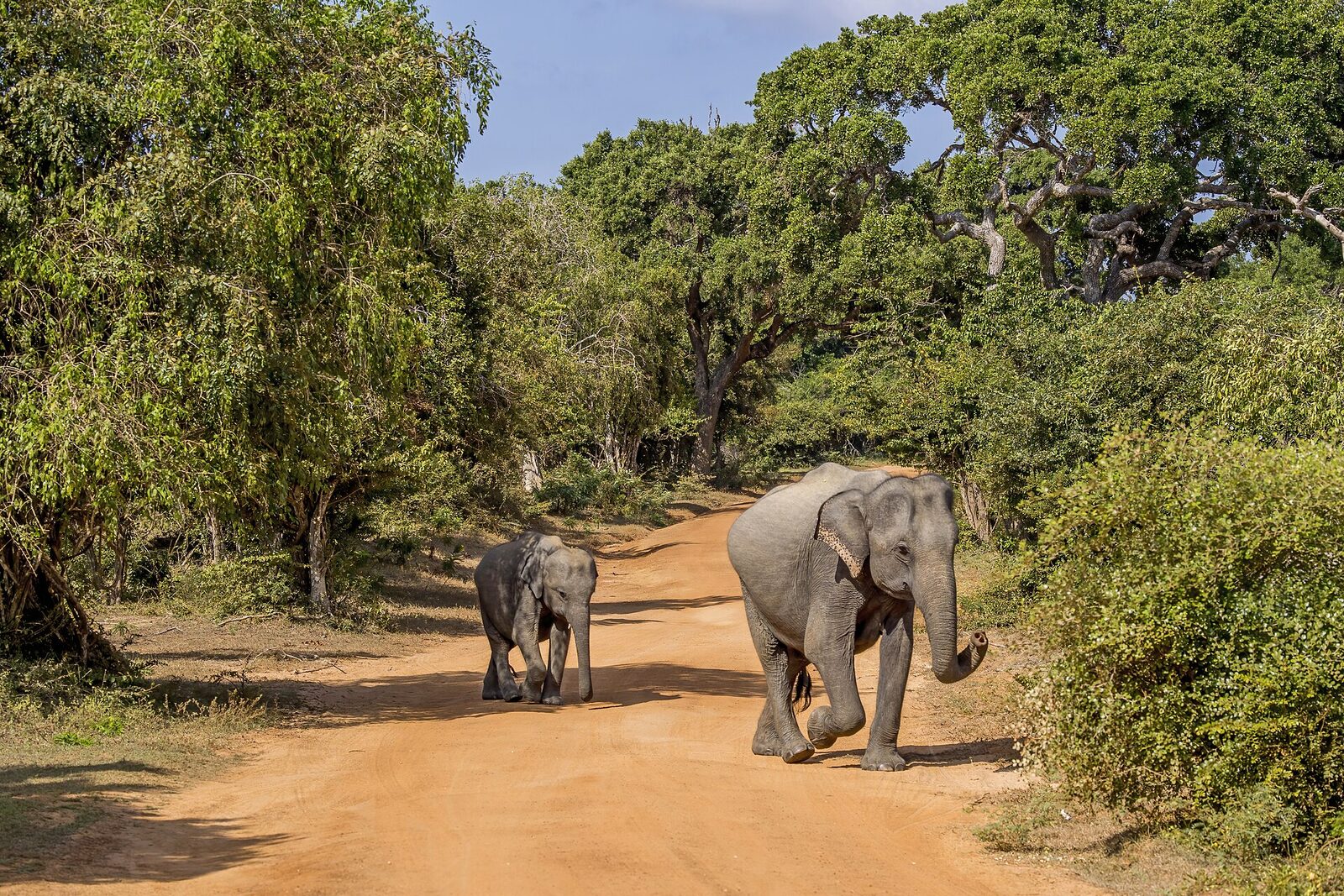
A wild female elephant and her calf together in Yala National Park.
Yala, Sri Lanka · Charles J. Sharp · CC BY-SA 4.0 · Cropped

What captivity can take away

The animal in the costume
has a social world.

Particular companions.

Researchers followed 286 adult females at Udawalawe for 20 months. Groups changed, but elephants retained longer-term companions.17 Separation can mean losing access to particular individuals, not merely being moved to another enclosure.

Cooperation, not just commands.

In a controlled Thai study, elephants learned to wait for a partner before pulling a rope that required two animals to obtain food.19 The observed pause shows coordination. It is a glimpse of abilities that a parade does not display.

Distress deserves assessment.

A study of 89 elephants at 39 zoos found social conditions predicted repetitive behavior such as swaying.25 Calling it dancing is not a welfare assessment. A short clip cannot diagnose PTSD either.

Food and survival are not the whole of welfare. Movement, companions, health and choice belong in the picture.

A perahera that does not require this

Keep the devotion.
End the elephant
performance.

Our position is an elephant-free perahera: preserve the drumming, dance, craftsmanship and gathering while ending the use of living elephants as ceremonial performers.

That transition must pay for the animals’ remaining lives and the skilled people who care for them. Long-captive adults need assessed care plans; an end to performing is not a promise that every elephant can simply be released.

Accountability has to be specific.

  1. Make welfare visible.Ask organizers to disclose veterinary fitness assessments, restraint practices, sourcing and responsibility for each elephant.
  2. Stop requiring elephants to perform.Ask temples, event organizers and sponsors to support an elephant-free perahera and a funded transition.
  3. Pay for lifelong care.Support transparent provision for veterinary treatment, movement, suitable social contact and skilled caregivers.

Reverence should be something an elephant can live with.

Sources, methods & corrections