The Elephant Ledger

A voice for Sri Lanka’s elephants.

Chapter 01 · The Evidence

Six lives.
Look closer.

A life is more than an example. These are individual records, with sources and limits attached.

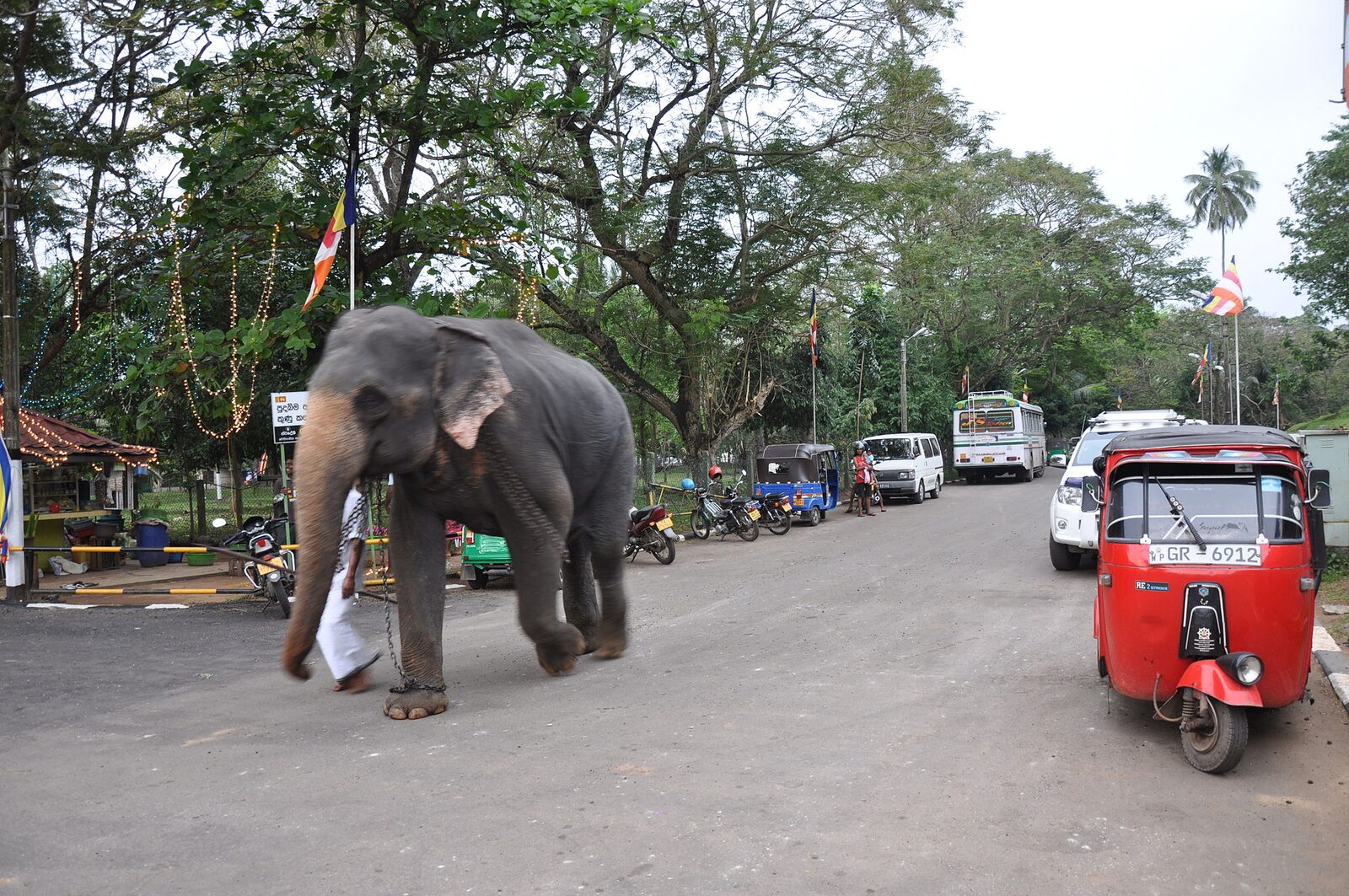
A captive elephant with chains at Kelaniya, near Colombo.
A captive elephant at Kelaniya. This contextual photograph is not of any named elephant in the case files.Jorge Láscar · CC BY 2.0 · Wikimedia Commons · Cropped

The cases below are different. A reported collapse is not a veterinary diagnosis. An allegation is not a conviction. A government rescue is not a complete account of a life. Read each record with those distinctions intact.

Individual record

Tikiri

Kandy · August–September 2019

The costume was visible. Her condition was not.

Read the full record

CNN’s contemporary account describes photographs released by Save Elephant Foundation, a withdrawal from the closing parade, and the subsequent announcement of Tikiri’s death. The organization put her age at 70. Those photographs changed what an audience could know about an animal it had seen dressed for celebration.2

The temple’s reported explanation was a digestive condition that prevented weight gain without reducing her ability to participate. CNA also relayed the claim that her owner hoped participation would help her recover. These are the explanations offered at the time; they do not resolve whether participation was appropriate.3

Illness does not make the welfare question disappear. It makes the decision to ask a frail animal to perform more consequential.

Individual record

Muthu Raja / Sak Surin

Sri Lanka → Thailand · 2022–2023

One elephant’s medical needs became an international operation.

Read the full record

Thailand’s Foreign Ministry recorded an expert recommendation that Sak Surin stop participating in parades and return for treatment. It also recorded his move to Dehiwala Zoo on 9 November 2022 for initial care.5

The Thai Embassy’s transfer record traces the next steps: departure from the zoo late on 1 July 2023, a cargo flight, arrival in Chiang Mai the following afternoon, and onward travel to Lampang for quarantine and treatment. The operation involved veterinarians, mahouts and officials from both countries.4

This is what sustained attention can produce: a change in where an elephant lives and who is responsible for his care. It also leaves a difficult question. What happens to an animal whose condition never becomes a diplomatic concern?

Individual record

Kanakota

Sigiriya · reported in 2019

A tourist ride is a short experience for the visitor. For the elephant, it is work.

Read the full record

PETA’s account, citing reports from Sri Lanka and the work of Moving Animals, described a young elephant collapsing and dying while used for tourist rides. It reported shackling, a heavy passenger seat and control with a bullhook.6

We keep the account’s attribution visible. The precise number of rides and the medical cause of death are not established here. A powerful story becomes weaker when uncertain details are made exact.

Individual record

Myan Prince / Myan Kumara

Bellanwila · January 2020 reporting

The dispute was also about what people considered acceptable.

Read the full record

The Daily Mirror reported footage of the elephant being beaten while restrained at Bellanwila Temple. In its follow-up, a temple spokesperson acknowledged a beating and described it as a way to secure obedience.7

“It’s just a tiny beating”7

That was the spokesperson’s description, as reported by the Daily Mirror. The words matter because they reveal how harm can be minimized without denying the act itself.

The same newspaper had earlier reported the temple’s rejection of what it considered exaggerated coverage. Both responses belong in the record.8

The difference between the two accounts is revealing: what an audience recognizes as suffering may be treated by those responsible as routine handling. Normality is not an answer to a welfare question.

Individual record

Singithi

Colombo · verdict reported 19 September 2025

A conviction matters. So do the limits of that conviction.

Read the full record

News 1st reported that Niraaj Roshan, known as Ali Roshan, received 15 years’ rigorous imprisonment and a Rs 20.6 million fine after conviction on two charges, including unlawful possession of Singithi. The court ordered the elephant into state ownership.10

The same report records acquittals on other charges, explaining that evidence—including disputed expertise in age estimation—did not establish them beyond reasonable doubt. The case cannot accurately be presented as a conviction on every alleged element of the wider trafficking conspiracy.10

Individual record

Nadungamuwa Raja

Sri Lanka · died 7 March 2022

What if the care attached to a symbol belonged to every animal?

Read the full record

Sri Lanka’s Cabinet Office records his national-treasure designation and thirteen occasions carrying the sacred relic casket between 2005 and 2021. The recognition shows the depth of his ceremonial significance.9

It is not evidence that he had a perfect life, or that other elephants were less deserving. His place in this ledger asks whether protection can become an ordinary entitlement instead of an exceptional honor.

The animal arrives with a history. Sometimes the paperwork hides it.

The 2020 Sri Lankan trade study drew on court cases, archives and interviews. It described falsified registration and institutional involvement in moving wild elephants into captivity. These are documented routes through the system, not proof that every captive elephant was illegally obtained.1

  1. DemandA use is found for a captive elephant.
  2. AcquisitionThe animal’s origin must be established.
  3. RegistrationPaperwork can conceal an unlawful origin.
  4. Continued useWelfare must be assessed throughout life.

This diagram is an editorial guide to the questions the record raises. It is not a claim that every elephant follows the same path.

Jayewardene’s historical FAO account describes the economic and practical world of elephant ownership and mahout work. That perspective matters: moving away from performances requires a plan for the people paid to care for elephants as well as the animals themselves.15

The hours outside the photograph

A 2026 Lady Freethinker investigation documented prolonged chaining on hard surfaces, visible wounds and exposure to crowds, noise and elaborate costumes at observed Sri Lankan venues. The investigators also raised concerns about coverings over the ears and heat regulation.16

The account comes from an organization campaigning to end these practices. It is evidence about what its investigator observed, not a statistical estimate of conditions everywhere. The right next questions are concrete: how long was the animal restrained, on what surface, with what veterinary assessment and access to companions?

Accountability is more than a law on paper

  1. 2021

    New registration and welfare rules

    A parliamentary account described the government’s aims for the August regulations: improved welfare, fewer registration irregularities and support for court proceedings.12

  2. 2021 onward

    The rules themselves are challenged

    The Centre for Environmental Justice records litigation challenging the regulations and elephant-release decisions. This is the litigant’s account, including its allegations—not an independent finding against every person involved.11

  3. September 2025

    Singithi’s case reaches a verdict

    The reported outcome combined conviction on two counts with acquittals on others. That distinction is essential to an honest account.10

  4. July–August 2026

    A new welfare bill enters the debate

    The official bill register lists the July proposal. Mongabay’s 24 August reporting describes an unresolved debate and further legislative steps. This edition does not treat the proposal as an enacted act.13,14

The current argument includes concern from veterinarians and keepers about safely handling large animals, and demands from advocates for protection against unnecessary suffering. Reporting on those disagreements is not an endorsement of either side’s factual claims. It makes the decision readers are being asked to engage with visible.14

Continue · Chapter 02What kind of life is being constrained? Start with the relationships, then examine what the studies measured.